
The Mirusuvil Massacre
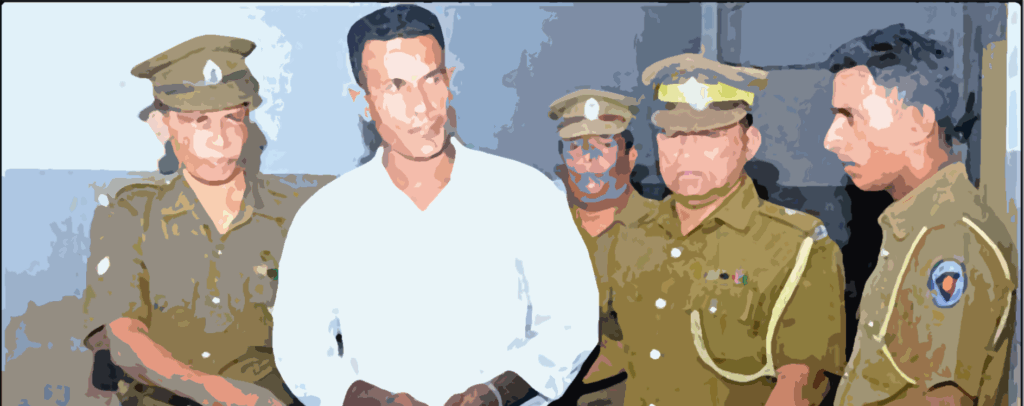
On 19 December 2000, eight internally displaced persons were arrested in Mirusuvil, located about 16 miles east of Jaffna town. The group consisted of Raviwarman, Thaivakulasingham, Wilvarasa, and his two sons: the 5-year-old toddler Prasad and his 13-year-old brother Pradeepan Jayachandran. Also included were Gnanachandran and his 15-year-old son Shanthan, along with Maheshwaran, Gnanachandran’s brother-in-law, who ultimately became the sole survivor of this harrowing experience. Within hours, all eight were murdered by Sri Lankan Army soldiers and buried in a mass grave.
The case was taken up at the Chavakachcheri Magistrate’s Court in December 2000, and fourteen army personnel were taken into custody. It seemed, initially, that there would be accountability, but this was only the beginning of a legal battle that would stretch across two decades.
The legal battle
The case moved through Sri Lanka’s judicial system glacially. Fourteen army personnel were arrested, and the case bounced between courts for over a decade. The trial faced a significant setback when Judge Sarath Ambepitya, who was hearing the case, was murdered in 2004. The inquiry was suspended indefinitely.
When proceedings eventually resumed in 2005 with a new bench, years more would pass. It took until June 2015, fifteen years after the massacre, for Army Sergeant Sunil Rathnayake to be convicted and sentenced to death.
On March 6, 2020, news emerged that Rathnayake would be pardoned. Twenty days later, President Gotabaya signed his pardon, and he was unincarcerated. This disheartened many, as the conviction, which took 15 years to secure, was nullified in less than 5 years.
Current status
The pardon sparked immediate legal challenges. The Centre for Policy Alternatives (CPA) immediately challenged the pardon in court, arguing it violated the constitutional rights of the victims’ families. But this legal battle has been ongoing for over four years now.
Judges who had previously been involved in Rathnayake’s case recused themselves. Court dates were repeatedly postponed. Finally, in October 2023, the Supreme Court agreed to hear the challenge.
As of March 2025, Rathnayake has been banned from leaving Sri Lanka while the court considers the case. Arguments in the Supreme Court were concluded in March 2025; however, the final judgment is still pending
The Mirusuvil massacre isn’t an isolated incident. Sri Lanka’s civil war left thousands dead and countless families without answers or justice. But this case is different; there was a trial and a conviction. There was, briefly, accountability. It raises an uncomfortable question: if documented massacres with convictions can be pardoned, what hope exists for the countless atrocities that were never even investigated?
For those interested in exploring the case further, detailed reports and primary sources are linked below.
References
https://www.cpalanka.org/elusive-justice-and-emblematic-cases-in-sri-lanka/
https://www.cpalanka.org/wp-content/uploads/2020/03/The-Pardon-in-the-Mirusuvil-Massacre.pdf
https://www.adaderana.lk/news.php?nid=101725
https://srilankacampaign.org/team/mirusuvil-massacre/
https://srilankachrd.org/la-mirusuvil.php
https://supremecourt.lk/wp-content/uploads/judgements/sc_tab_1_2016.pdf
Last updated – March 2026