
Chemmani
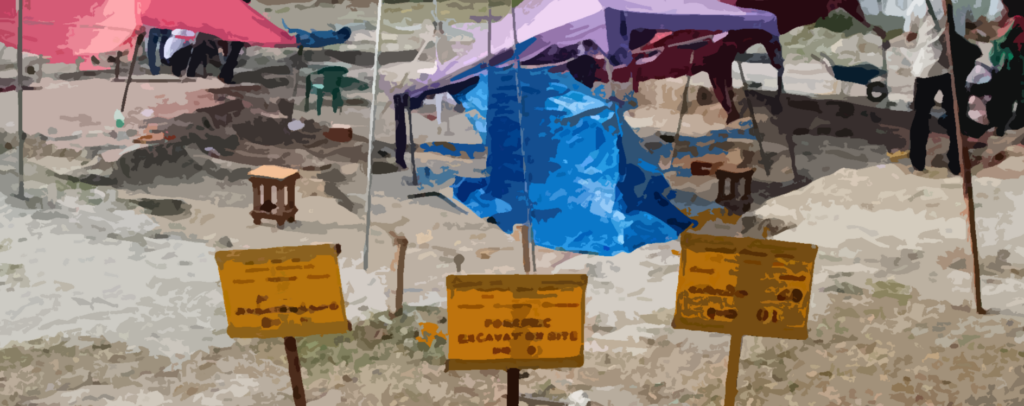
Sri Lanka’s journey toward post-war accountability has been closely tied to Chemmani, a name that has become synonymous with the issue of mass graves. Almost three decades ago, discussions surrounding these grave sites began here, and Chemmani serves as a prime example of a troubling trend seen throughout the island: the pattern of finding mass graves followed by initial investigations that ultimately stall, leading to a lack of identification or prosecution of perpetrators.
Since 1992, 17 mass grave sites have been unearthed across Sri Lanka, yet only seven have been fully excavated. Disturbingly, none of these investigations has resulted in successful prosecutions, leaving most victims unaccounted for. The story of Chemmani—beginning with excavations in 1999 that revealed 15 bodies and extending to the discovery in 2025 of hundreds more—highlights not only the scale of disappearances that occurred during the civil war but also the persistent challenges in achieving accountability for these atrocities.
How it all began
The Chemmani story first came to light in 1998, following the Krishanthi Kumaraswamy case. Lance Corporal Somaratne Rajapakse and four other soldiers were convicted of the gang rape and murder of the 18-year-old Krishanthi Kumaraswamy. They were also found guilty of the subsequent murders of her mother, younger brother, and a family friend who had gone in search of her.
However, Rajapakse’s testimony included details of how bodies of missing Tamils, possibly victims of the mid-1990s military operations in Jaffna, had been buried in Chemmani. He specifically claimed that he could identify 10 locations where bodies were buried in Chemmani. This testimony served as a public confirmation that mass graves existed in the area.
The 1999 Excavations
Under international pressure, authorities began excavations in June 1999. Rajapakse was brought to Jaffna to point out burial sites, with observers from Amnesty International present. The first body was found just two feet below the surface, a knee still wrapped in fabric.
Over the following months, 15 bodies were recovered. Some were blindfolded and bound. Two were identified as young men who had disappeared after arrest in 1996. Forensic analysis found signs of violent death in at least 10 cases.
Then, in December 1999, authorities announced that experts had reached a unanimous decision that no further graves existed. The investigation closed, despite Rajapakse’s claims and witness testimonies pointing to additional sites.
The Pattern
Chemmani is not the only mass grave site in Sri Lanka. A 2023 report by the International Centre for Ethnic Studies identified at least 17 (excluding those from the 2004 tsunami) mass grave sites discovered between 1992 and 2022. Of these, only seven have been excavated: Sooriyakanda, Chemmani, Durayappa Stadium in Jaffna, Matale, Kalavanchikudy (still pending), and two sites in Mannar. Unfortunately, none of these investigations have resulted in successful prosecutions, and most victims remain unidentified.
In 2015, a UN Working Group visiting mass grave sites reported “intimidatory tactics, threats, sexual abuse, and other forms of coercion” employed by certain security and investigative officers. The group recommended the establishment of an independent institution tasked with searching for the disappeared. This institution should have forensic expertise and unrestricted access to state archives.
Sri Lanka established the Office on Missing Persons (OMP) in 2016. However, activists interviewed for the ICES report indicated that the OMP has lost credibility since the 2019 government change, which brought new leadership and budget cuts.
Legal gaps further complicate the situation. There is no clear regulation regarding the chain of custody for evidence, nor is there a uniform procedure for handling remains from discovery to identification. Additionally, there is no clarity on when an investigation can be officially closed if the results are inconclusive. The absence of DNA databases also makes identification challenging, even when remains are recovered.
What does Chemmani represent?
Chemmani is a piece of a larger, unresolved pattern. The ICES report documents how the first official excavation at Sooriyakanda in 1994 found an estimated 300 bodies from the JVP uprising, but poor site protection meant most were never identified. At Jaffna’s Durayappa Stadium in 1999, 49 bodies were found during construction and sent to Colombo, but government officials issued no further statements. In Kalavanchikudy, excavation was ordered in 2014 for a suspected site containing around 100 Muslim victims; as of August 2022, it still hadn’t begun.
Sri Lanka has the world’s second-highest number of registered cases with the UN Working Group on Enforced or Involuntary Disappearances, with estimates ranging between 60,000 and 100,000 people who disappeared during and after the civil war. Mass graves represent only a fraction of this number.
The 2025 excavation at Chemmani has revealed a notably different momentum. Over two phases, investigators uncovered 240 sets of human skeletal remains, with 239 exhumed for forensic analysis. In November 2025, the anticipated third phase was temporarily halted due to heavy rainfall, which flooded the site. A delegation, including Jaffna Magistrate S. Lenin Kumar and the Judicial Medical Officer, assessed the situation and confirmed that standing water rendered the area unsafe for continued work. Although funding for the third phase has been secured, officials agreed to postpone until conditions improve, with the inspection team slated to return on 19 January 2026 for a reassessment. The future trajectory of this investigation will likely hinge on factors that have impeded past efforts, including political will, institutional capacity, and accountability issues.
Progress on the third phase of the Chemmani mass grave excavation is currently on hold. On February 9, 2026, the Jaffna Magistrate’s Court announced that a decision regarding the commencement of this phase will be made on March 16. The court noted that technical measures have been implemented to drain rainwater that had flooded the areas previously excavated.
The importance of sites like Chemmani goes beyond the forensic evidence they hold. Researcher Chulani Kodikara points out that the government often attempts to erase the topic of disappearances, both by downplaying the severity of the situation and through the physical erasure of the disappeared, who remain unaccounted for. When mass graves are uncovered, they can unfortunately be treated in the same way, leading to a pattern that ignores the true scale of the issue.
Chemmani is one of 17 mass graves linked to a broader tragedy, highlighting the ongoing struggle for accountability, reconciliation and justice. These sites not only represent the loss of individual lives but also reflect the societal effort to forget or erase painful histories. This makes it vital to confront and remember these stories, ensuring that the voices of the disappeared are not silenced any longer.
References
https://www.ices.lk/publications-1/mass-grave-sites-in-sri-lanka%3A-history-and-legal-framework
https://www.tamilguardian.com/content/amnesty-international-calls-transparency-chemmani-mass-grave-excavations
https://ceylontoday.lk/2025/06/09/chemmani-mass-grave-probe-amnesty-urges-govt-to-ensure-transparency/
https://island.lk/amnesty-presses-lanka-for-transparency-in-chemmani-mass-grave-probe/
https://www.dailymirror.lk/print/news-features/In-support-of-tortured-victims-Realities-of-torture-in-Sri-Lanka/131-313092
https://ceylontoday.lk/2025/06/06/call-for-intl-probe-into-chemmani-mass-grave/?utm_source=chatgpt.com
https://www.dailymirror.lk/breaking-news/Human-skeletal-remains-found-in-Chemmani-Jaffna/108-310668
https://www.dailymirror.lk/breaking-news/Government-not-willing-to-act-upon-hearsay-when-it-comes-to-mass-graves-in-North-Justice-Minister/108-311754
https://www.dailymirror.lk/breaking-news/Supreme-Court-suspends-recent-gazette-on-Northern-Province-land/108-312742
https://www.dailymirror.lk/breaking-news/MP-Shanakiyan-concerned-over-handling-of-Chemmmani-mass-grave/108-312953
https://www.dailymirror.lk/opinion/Sri-Lanka%E2%80%99s-Silence-on-Chemmani-Mass-Grave%3A-A-Call-for-Justice-and-Unity/172-311849
https://www.dailymirror.lk/opinion/Sri-Lanka%E2%80%99s-Silence-on-Chemmani-Mass-Grave%3A-A-Call-for-Justice-and-Unity/172-311849
https://www.dailymirror.lk/breaking-news/Government-not-willing-to-act-upon-hearsay-when-it-comes-to-mass-graves-in-North-Justice-Minister/108-311754
https://ceylontoday.lk/2025/06/06/call-for-intl-probe-into-chemmani-mass-grave/?utm_source=chatgpt.com
https://www.tamilguardian.com/content/un-experts-press-sri-lanka-disappearances-arbitrary-detentions-and-intimidation-geneva
https://www.tamilguardian.com/content/relay-hunger-strike-jaffna-enters-fourth-day-demanding-international-justice
https://www.tamilguardian.com/content/relay-hunger-strike-jaffna-enters-fifth-day-demanding-international-justice
https://www.tamilguardian.com/content/relay-hunger-strike-jaffna-enters-fifth-day-demanding-international-justice
https://www.tamilguardian.com/content/tamils-face-surveillance-harassment-under-npp-rule-new-report
https://www.tamilguardian.com/index.php/content/sri-lanka-must-face-international-courts-say-experts-geneva-panel
https://web.archive.org/web/20070610235402/http://www.priu.gov.lk/news_update/Current_Affairs/ca200002/20000217dna_chemmani.html
https://dailynews.lk/2026/02/09/local/947903/chemmani-mass-grave-excavation-plans-set-for-march/
https://x.com/kumanan93/status/2020736812470431871
Last updated – March 2026