
The X-Press Pearl Case: Four Years of Questions and a Billion-Dollar Judgment
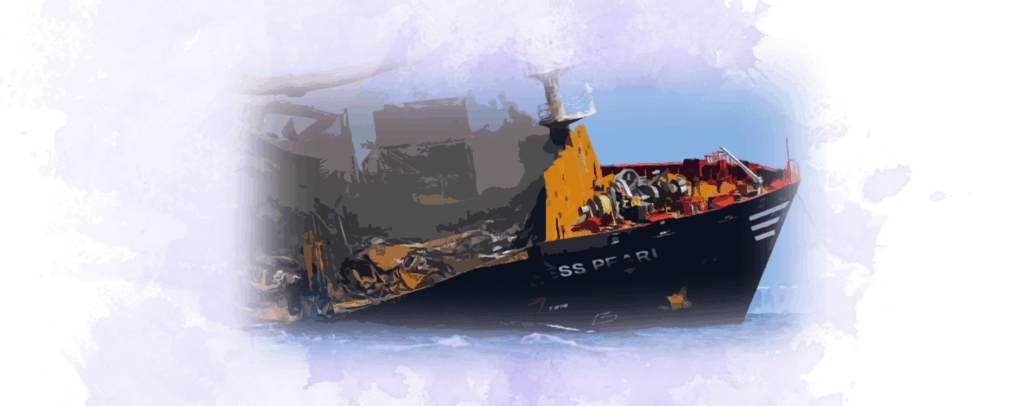
In May 2021, the Singapore-flagged container ship X-Press Pearl caught fire while anchored off Colombo, carrying 1,486 containers of cargo that included 25 tonnes of nitric acid. The vessel burned for days, sent plastic pellets washing onto Sri Lankan shores, and eventually sank in two sections. It became one of the country’s worst maritime disasters.
Four years later, the case has moved through allegations of corruption, questions about delayed compensation claims, and finally, a Supreme Court judgment that ordered the ship’s owners to pay $1 billion as initial compensation for the damages caused to the Sri Lankan coast. However, this ruling has faced resistance.
What Happened in 2021?
On May 20, smoke was reported coming from a cargo hold. Firefighting efforts began the following day, utilising tugs and helicopters; however, the fire continued to spread. Two explosions occurred on the 22nd and 25th of May. The crew was evacuated, with some sustaining injuries. By 2nd June, despite attempts to salvage the vessel, the rear section of the ship sank to the seabed at a depth of 21 meters. The forward section remained afloat and continued to smoke before it also sank into the depths. Navy divers later retrieved the voyage data recorder. In January 2023, the rear section of the wreck was raised and taken for dismantling.
Marine life died. Beaches were covered with debris. Fishing communities lost their livelihoods. The damage, experts said, would be felt for decades.
The Allegations
In April 2023, opposition MP Eran Wickramaratne raised concerns that the government had been slow to file compensation claims, which had to be submitted before 20th May 2023. He questioned whether corruption was at play, suggesting potential damages could exceed $6 billion.
That same month, then Justice Minister Wijeyadasa Rajapakshe told Parliament that an individual named Chamara Gunasekara, also known as Manjusiri Nissanka, had allegedly received $250 million in connection with the disaster. The minister did not provide further details. The former chairperson of the Marine Environment Protection Authority questioned why the minister would not reveal more about this alleged bribe.
Further, Chinthaka Waragoda, who reportedly built a machine to clean up debris, claimed he was offered money to stop using it, allegedly to hide the full extent of the damage.
In June 2023, Transparency International Sri Lanka filed a petition in the Supreme Court, pointing to these allegations and asking that those responsible be held accountable. The Attorney General’s Department said it had filed a case in Singapore to seek compensation, though the amount would be determined later.
The Judgment
In July 2025, the Supreme Court issued its verdict. A five-judge bench found that the ship’s master, operator, and local agent had withheld information from port authorities about the situation on board when the ship entered Sri Lankan waters. They failed to report according to international maritime law, which gave Sri Lankan officials less time to respond.
The court held the X-Press Pearl group liable under the “Polluter Pays Principle” and ordered an initial payment of $1 billion within one year. The first instalment of $250 million was due by 23rd September 2025. Further payments would be determined later.
The judgment also criticised several state officials. The former state minister for coastal conservation had not established the Marine Environment Council as required by law. The chairperson of the Marine Environment Protection Authority failed to convene the board and issue clear directives during the crisis. The Attorney General was faulted for choosing to file the case in Singapore rather than in Sri Lankan courts with admiralty jurisdiction.
However, the court found that the Harbour Master and the Ports Authority had acted according to law and industry practices, given that they were not told about the damaged container before the ship arrived.
The court directed the Attorney General to investigate criminal offences and the Commission to Investigate Allegations of Bribery or Corruption to look into the corruption claims. It established a compensation commission and an environmental restoration committee to manage the funds and recovery efforts.
The Refusal
In September 2025, X-Press Feeders announced it would not pay. Chief executive Shmuel Yoskovitz said in an interview that paying would set a dangerous precedent for global shipping.
Four and a half years after the X-Press Pearl disaster, the situation surrounding compensation remains dire. In July 2025, Sri Lanka’s Supreme Court ordered $1 billion in compensation, yet almost nothing has been paid out despite the Supreme Court order. The only tangible recovery to date is a mere Rs. 300 million remitted by the local shipping agent. The court formally concluded its supervision of the case on 26 January 2026, transferring enforcement responsibility to the Executive. However, the Compensation Commission, which was supposed to distribute the funds, has yet to become operational due to unapproved terms of reference. With the Attorney General advocating for a negotiated settlement through foreign courts and environmental groups warning that international liability caps could significantly limit recoverable amounts, the case has become ensnared in a cycle of institutional paralysis, risking a permanent lack of resolution. Without a coordinated enforcement plan in place, the prospects for meaningful compensation appear increasingly bleak.
References
https://www.adaderana.lk/news.php?nid=112806
https://www.themorning.lk/articles/0Vw8jTahmDHWEHTIGFmg
Last updated – March 2026